
Single-product orders
Start with the product’s protected dimensions, then check closure and movement. Oversizing can add material, storage, and protective-fill requirements.
Corrugated packaging for ecommerce shipments, curated sets, and subscriptions.
Request a Packaging Quote →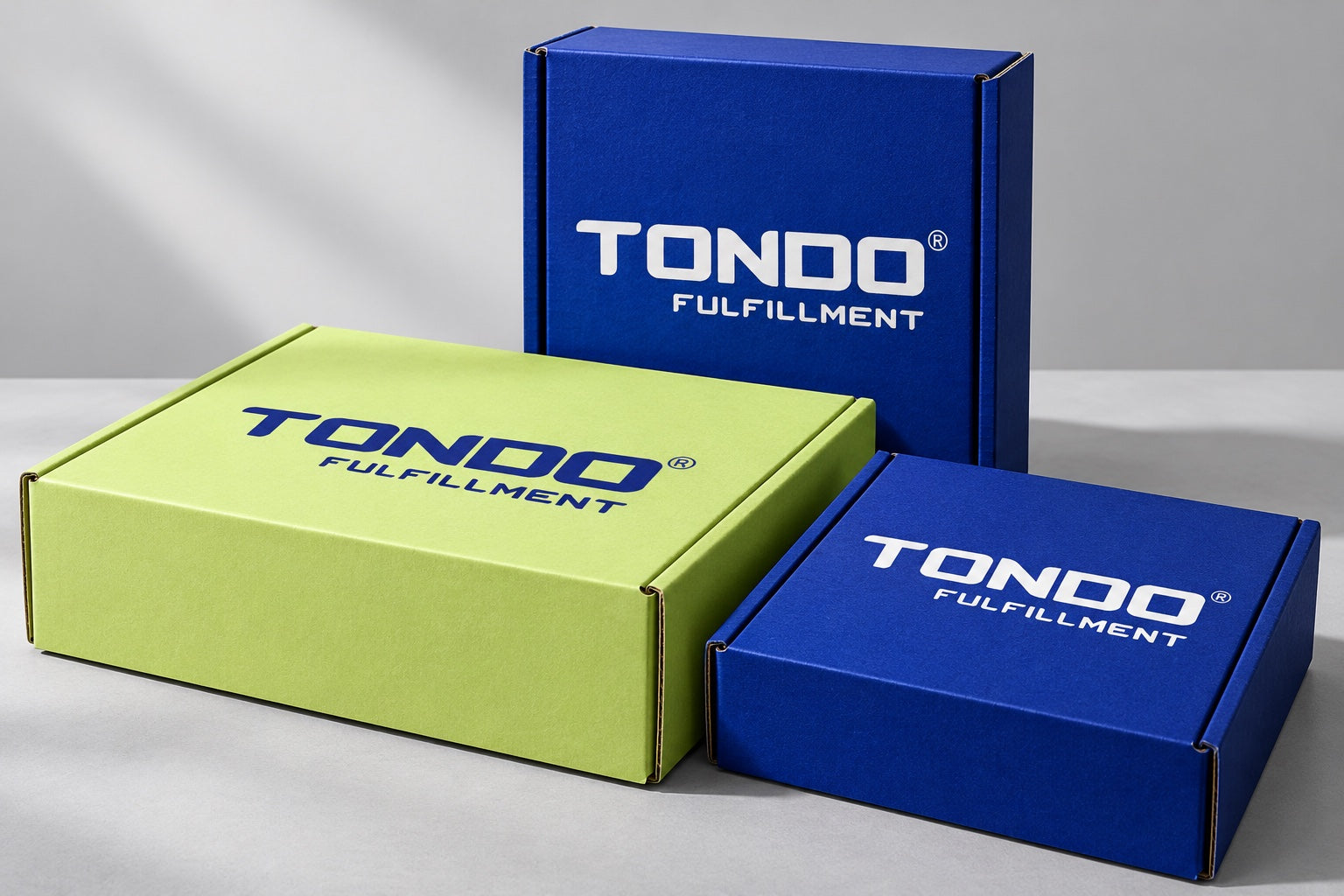
A mailer box can hold a single product, a recurring subscription, or a multi-component launch kit. Start with a component list and decide what keeps each item in position. Tissue, dividers, and inserts should be specified with the box rather than assumed to be included.
Connect the packaging plan to Subscription Box Fulfillment for recurring shipments or Kitting & Assembly for a coordinated build.
A custom corrugated mailer has two jobs: holding the order and presenting your brand. Compare the options against the packed weight and product arrangement before choosing the visual finish.
| Your choice | What it changes | What to confirm |
|---|---|---|
| Board and surface | A kraft or white-facing surface changes the appearance of printed colors and unprinted areas. | Ask for the proposed board construction and a representative print sample. Choose strength around the contents, not color alone. |
| Outside and inside printing | Exterior graphics introduce the brand; interior printing becomes visible when the lid opens. | Mark the printed panels on the dieline and identify areas reserved for shipping labels and closure tape. |
| Inserts and dividers | A fitted insert or divider establishes product placement within a subscription box or PR kit. | Supply each item’s dimensions and weight. Check loading, removal, movement, and future assortment changes. |
| Finish and closure | Surface treatment and the closing method affect appearance and handling. | Request the available finishes for the selected board, then review the closed sample with the actual order inside. |

The box, products, insert, and protective layers should be reviewed together. For a multi-item set, identify what keeps each component in position and whether the customer sees the intended presentation after delivery. A printed lid is only one part of that experience.
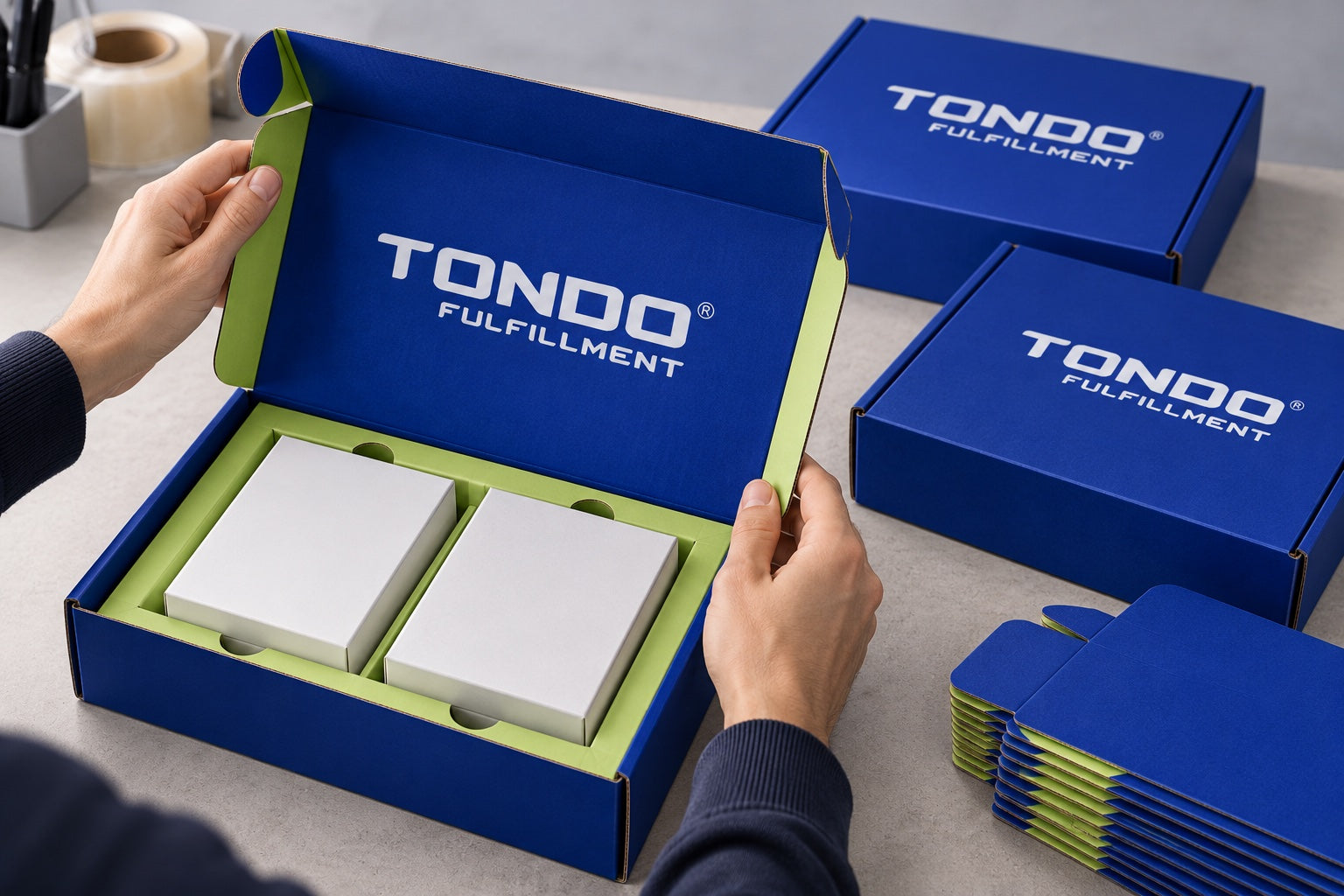
For a skincare launch with two cartons and a printed card, begin with the product arrangement. Place the heavier item securely, separate surfaces that could rub, and keep the card visible when the lid opens. Test the proposed box with that complete arrangement before using it as the standard for repeat orders.
Compare the complete kit: box, printing, insert, tissue, assembly time, storage, and the outside dimensions of the finished shipment. A more compact empty box is not automatically better if it slows packing or presses against the contents.
Give Tondo a component list, approved placement photo, quantity range, and target delivery window. Where Tondo also fulfills the orders, use that same packout reference for receiving materials, assembling kits, and replenishing packaging.
| Decision | What to specify |
|---|---|
| Interior dimensions | Length × width × depth of the assembled box, with units. Include the full arrangement of products and protective materials. |
| Board and protection | Packed weight, fragility, preferred white or kraft appearance, and any inserts or cushioning. Board grade and construction need project review. |
| Printed surfaces | Outside, inside, or both; logo files, color references, print coverage, and any special finish requested. |
| Assembly and storage | How the box closes, how staff will assemble it, available storage, and whether it ships alone or in an outer carton. |
| Quantity and delivery | Units by size and design, initial run versus replenishment, destination, and required arrival date. |
Share product dimensions, handling needs, quantities, and delivery requirements.
Compare materials, construction, print placement, and requested finishes.
Confirm the final specification, artwork, proof or sample process, and quoted schedule before production.
Coordinate delivery, storage, assembly, and replenishment with your team.
Custom mailer boxes are corrugated packages designed to contain and present an order. They can suit ecommerce shipments, custom subscription boxes and PR boxes, but the contents determine the structure and protection. Plan the largest intended assortment before choosing the box size or placing artwork.
Arrange every component as it will ship, including the insert, printed card and tissue. Check whether items can move, whether a bottle or jar needs separation, and whether the lid closes without pressure on the product. For subscription assortments that change each month, compare a repeatable box size with adaptable custom box inserts. This can keep the presentation consistent while giving the packing team clear placement instructions.
It depends on the contents, closure and delivery requirements. Some packouts can use the mailer as the shipping container; others need additional protection or an outer box. Review and test the complete packed order rather than judging protection from the empty box.
List each product, its dimensions and weight, the layout, insert or divider needs, printed materials and the intended delivery date. Explain the opening sequence and whether the package goes directly to a recipient or into another shipping container.
A mailer box provides a corrugated structure around a shipment or curated set. A folding product carton presents an individual item and often needs an outer shipping package. Compare the complete protection and presentation requirements before selecting either format.
They answer different questions. A structural sample checks fit and assembly; a printed sample helps assess appearance. Confirm which approvals are appropriate and included in the quote.
Possibly. Compare the smallest and largest packouts and determine whether inserts or protective layers can accommodate the variation.
Request outside, inside, or both in your specification. Available surfaces, print methods, and proofing are confirmed for the selected construction.
Yes. Send the intended interior dimensions and packed product details for sourcing review. The final construction and dimensional tolerances need approval.
Only when they are specified in the approved quote. List dividers, foam, tissue, and other protective components separately.
Minimums vary by construction, printing, and supplier. Tondo confirms the minimum and quantity options with the quote; this page does not promise no-minimum production.

Printed folding cartons for individual products, retail shelves, and gift sets.
Explore Custom Product Boxes →
Printed sheets for wrapping, layering, and a coordinated unboxing experience.
Explore Custom Tissue Paper →Share your product, dimensions, quantity, artwork, and delivery needs. Materials, minimums, sample options, pricing, and timing are confirmed for your project.